
PUGLIA and MATERA
Where Stone Remembers Everything
A slow, immersive journey through Puglia and Matera. The geological, the cinematic, the ancient, and the utterly alive.

Puglia and Matera do not seek to impress at first sight. Their true character is rooted in the land, shaped over millions of years by limestone. Here, you are encouraged to slow your pace and pay close attention to your surroundings. The sense of calm is not created by traditional luxury or flawless service, but by the enduring presence of the landscape itself.
The first thing that strikes you when you arrive in the heel of Italy is the light. It is not the gentle, filtered light of the north, but a clear Mediterranean brightness that reveals everything as both ancient and renewed. Trulli houses dot the Valle d’Itria, and olive trees, some with trunks shaped by centuries, stand in silvery lines along the roads. Beneath the red earth, the white stone, and the wild herbs, limestone is always present.
If you crouch by the roadside and crush wild thyme between your fingers, the oil releases a sharp, green scent that stays with you for hours. It carries the heat, the rocky soil, and the resilience of plants that survive here. This scent becomes part of your memory, and sometimes, months later, it returns to you unexpectedly, even on an ordinary afternoon far from Puglia.
The Geology Beneath Everything
To understand Puglia is to understand what lies beneath it. The Murge plateau, a wide stretch of exposed limestone, is the backbone of the region and was once a shallow sea. The rock here was once alive, made from shells, coral, and layers of ancient sea life that have slowly turned into the bright white stone you see everywhere.
The White
Calcarenite limestone
The ancient seabed has risen and now sits exposed to the sun. In the midday light, the stone is so bright that sunglasses are essential, even in the shade. This is the same stone used to carve the sassi of Matera, to build the trulli of Alberobello, and to construct the masserie that have been restored over generations. It is porous, chalky, and almost soft to the touch. When you trace the fossilised outlines of shells, you can feel the presence of the ancient sea that once covered this place.
The Red
Terra rossa clay
This iron-rich clay remains after the limestone has dissolved. Its colour is deep and vivid, a red so strong it stands out against the white stone. It clings to your boots, marks white linen, and settles into the cracks of dry-stone walls with a soft touch. The ancient olive groves of Puglia grow in this red earth, drawing minerals from the soil into every drop of their oil.
Walking around a trullo, you see both colours at once: a bright white cone rising from the red earth. The contrast is striking, almost unreal, yet it feels entirely natural. This is the real palette of the South, not a decorative choice, but something that belongs to the land itself.
A dry-stone wall is rough, built from irregular stones carefully fitted together. When you run your hand along it, you can feel the decisions made by many hands over centuries. The wall keeps the warmth of the afternoon sun well into the night, releasing a gentle heat, like the touch of someone who has worked all day outdoors.
Matera
The City That Never Left Its Cave
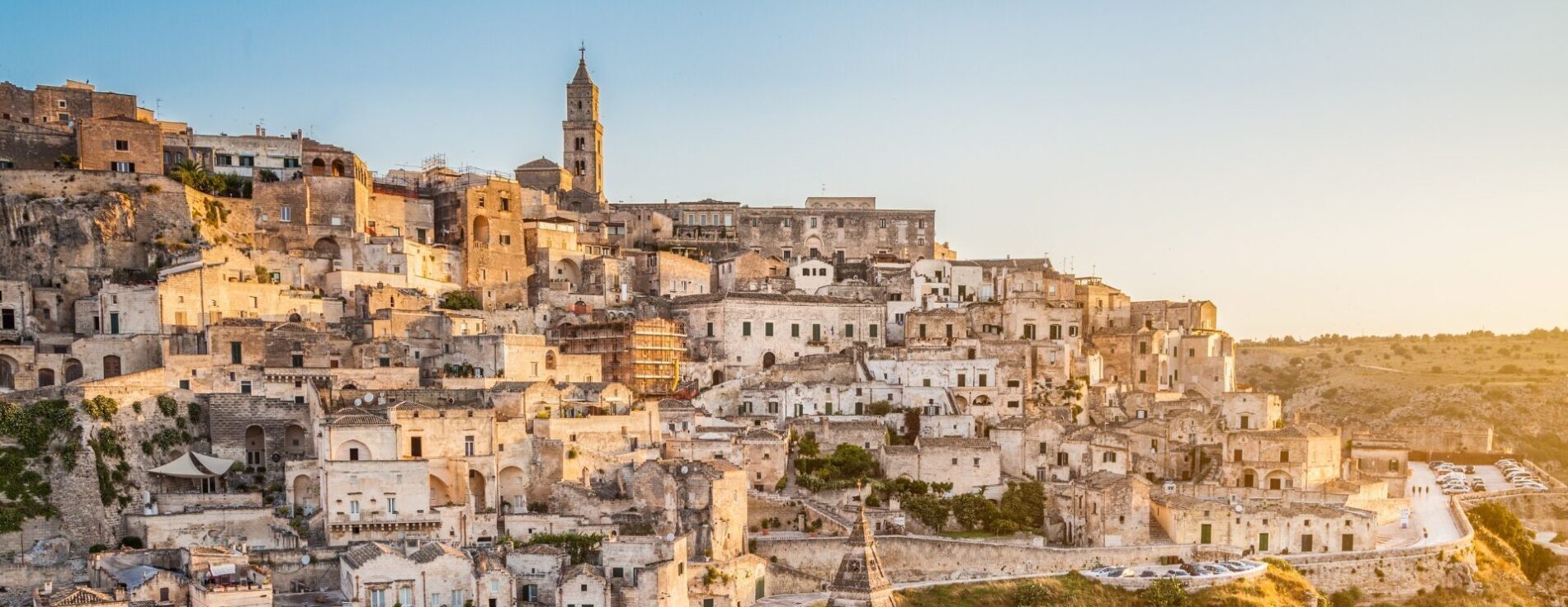
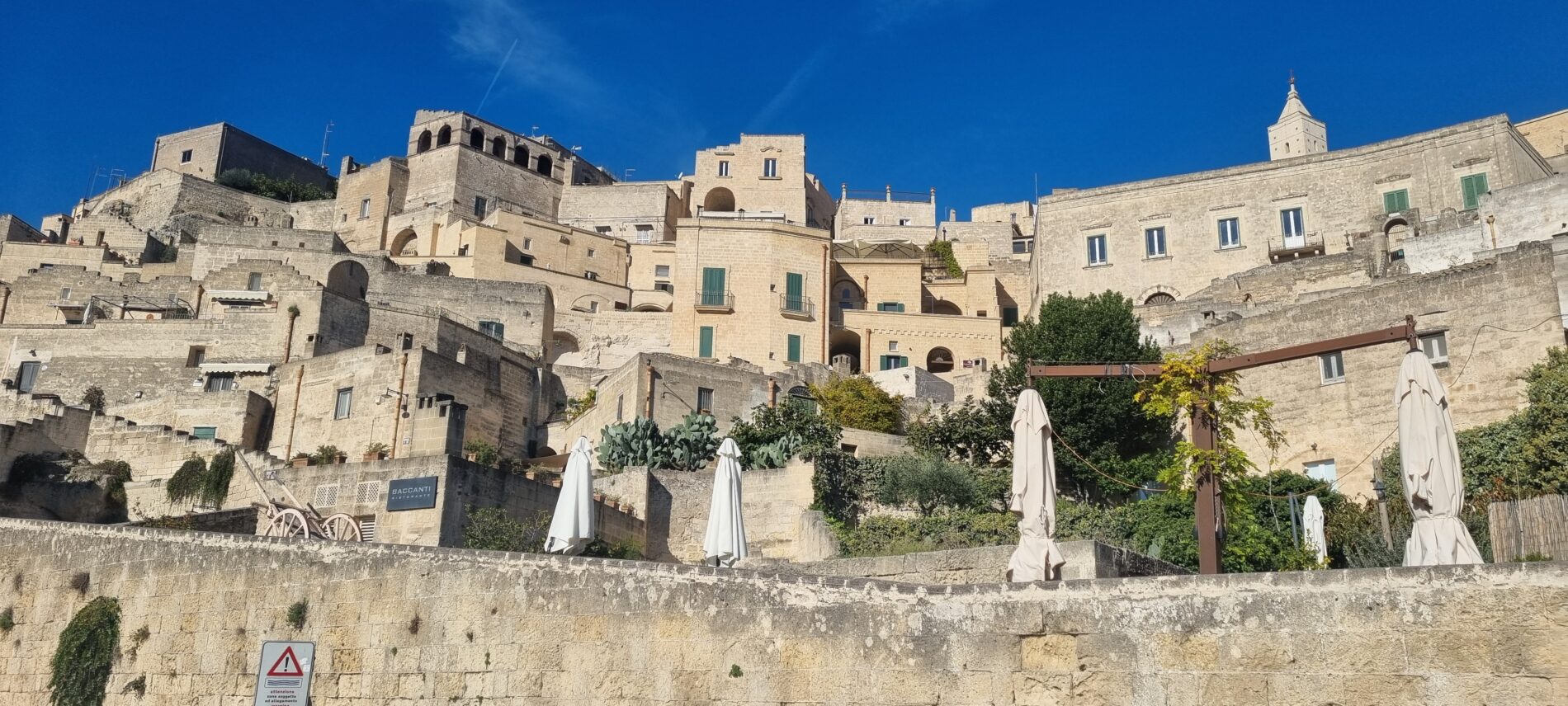
Matera appears almost like a hallucination. You travel along an ordinary road with petrol stations, roundabouts, and the flat landscape of modern Basilicata, and then suddenly the city opens up before you, dropping into a ravine older than you can imagine. The Sassi are two large areas of cave dwellings carved into the tufa stone, inhabited for at least 9,000 years.
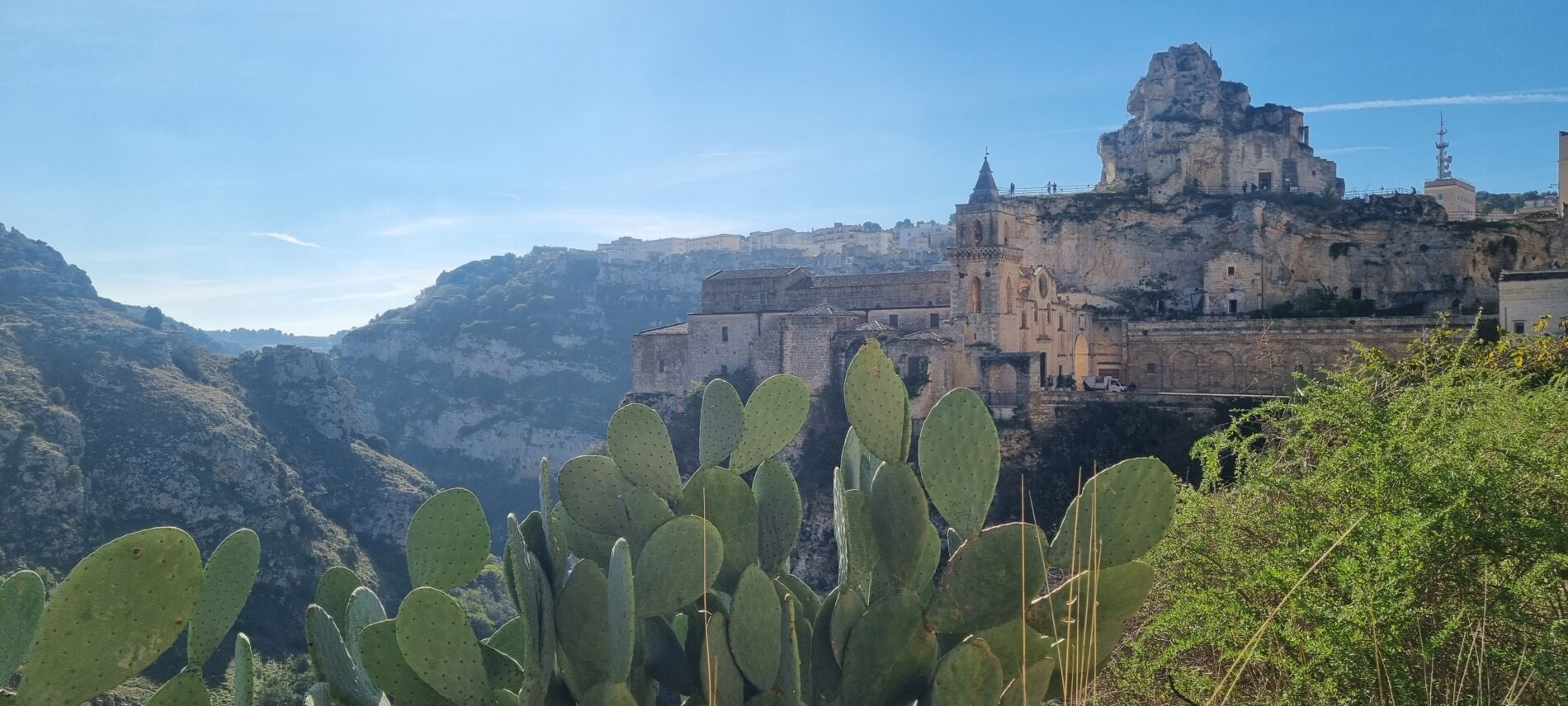
This is not a ruin. This is not a reconstruction. The cave churches still hold their Byzantine frescoes, ghostly and particular in the low light. The cistern systems beneath the city, an engineering feat of extraordinary sophistication that kept Matera alive through centuries of drought, are still intact, still legible, still quietly extraordinary. You walk on the roofs of houses that are themselves carved from the rock on which you stand. The ground is the building.
“There is something in the smell of a sassi dwelling, cool stone, the ghost of woodsmoke, the particular mineral damp of carved tufa, that reaches past memory into something earlier. Before memory, perhaps. Before language. Some part of the body recognises shelter carved from rock the way it recognises a lullaby heard once, long ago, and never quite forgotten.”
What Matera does to time is remarkable. Cities usually layer their history: medieval over Roman, baroque over medieval, concrete over everything. Matera folds it. The Neolithic, the Medieval, and the Contemporary exist simultaneously, in the same stone. Sitting in a café carved from a cave, drinking excellent coffee while a swallow nests in an ancient corbel above the door, you feel not nostalgia but something more disorienting: genuine temporal vertigo. You are not visiting the past. You are in a continuous present that has been running for 9,000 years.
The sassi face east. In the early morning, the sun rises directly into the ravine, and the stone blazes gold — not the warm gold of autumn but an almost white gold, the colour of molten limestone. By afternoon, the upper dwellings are in full shade while the ravine bottom holds patches of burning light. This is a city engineered around the angle of the sun, and it still works perfectly, as it has every morning for ninety centuries.
On Screen · Matera as Cinematic Landscape
A City That Directs Itself
There is a reason filmmakers keep returning to Matera. The sassi possess something that no set designer can manufacture, and no CGI team can convincingly replicate: the quality of a landscape shaped by human hands across so many millennia that it has become geological. It does not look like history. It looks like time itself, rendered in stone and shadow.
Pier Paolo Pasolini chose Matera to stand in for ancient Jerusalem in his 1964 Il Vangelo secondo Matteo. The logic was absolute: the Sassi were the most convincing vision of a biblical city then surviving anywhere in the world, a place where the domestic and the sacred occupied the same carved rooms, where architecture felt not built but grown from the earth beneath. More recently, Matera became the backdrop for an iconic opening chase in No Time to Die — its baroque upper town and sheer cliff-face cave dwellings framing one of the franchise’s most kinetic sequences with an authority no purpose-built location could rival.
To stand at the ravine’s edge at dusk, when the tufa turns from white to amber to deep architectural grey, is to experience light that a director of photography would spend a career trying to recreate artificially. Matera gives it freely, every evening, to anyone patient enough to wait.
Mel Gibson’s The Passion of the Christ was filmed here. So were scenes from Ben-Hur and Wonder Woman. The pattern holds: directors arrive looking for an ancient world and discover something more unsettling, a living city that has outlasted every narrative imposed upon it, and that quietly overwhelms each new story told within its walls.
Il Vangelo secondo Matteo · 1964 ~ The Passion of the Christ · 2004 ~ No Time to Die · 2021 ~ Ben-Hur · 2016 ~ Wonder Woman · 2017
Stone That Has Learned Luxury
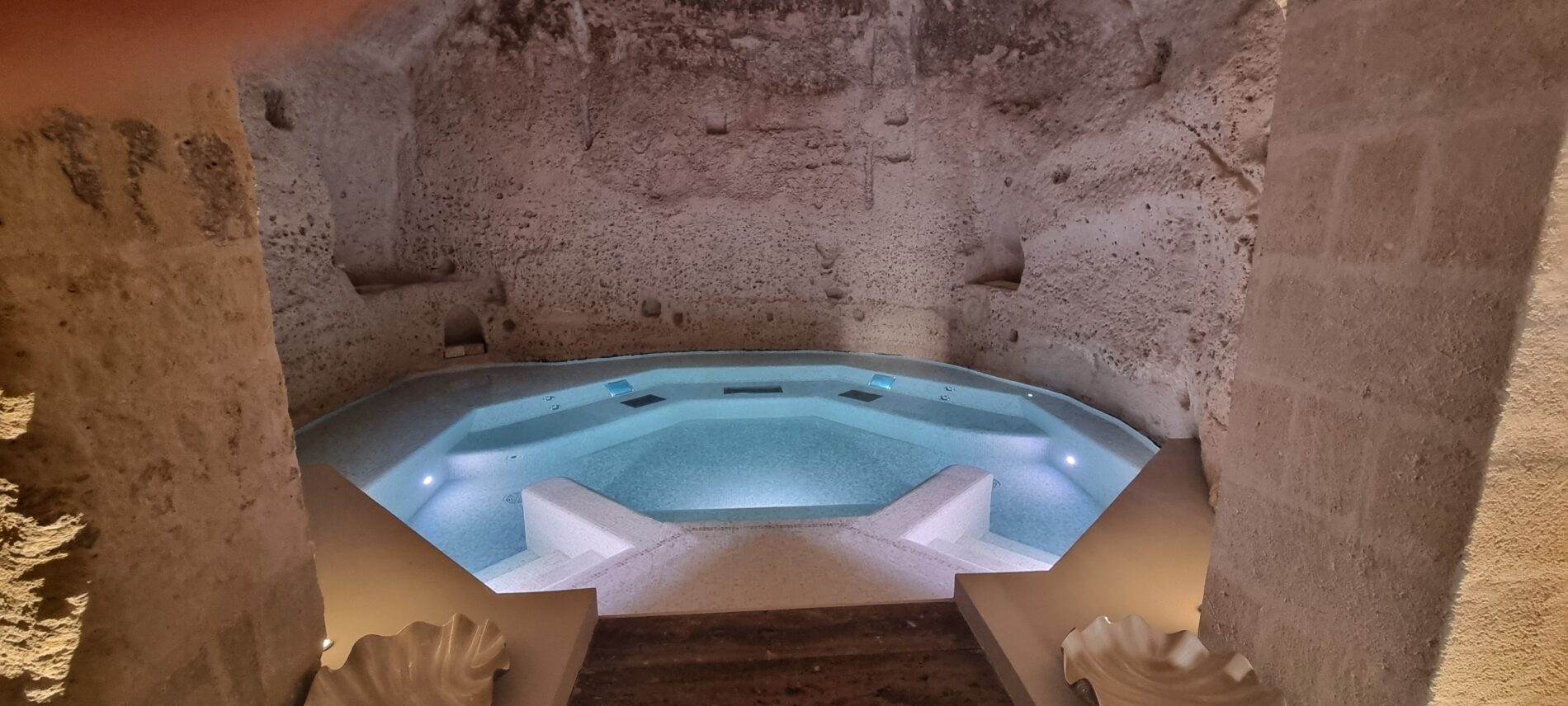
Matera’s hotels are unlike any traditional hotel. They are caves that have been adapted for comfort, ancient chambers with centuries of history in their walls, now cared for with a dedication to both beauty and ease that suits the spirit of the place. Sleeping in the Sassi is not a compromise on luxury; it is a reminder that true luxury is about being fully present in a remarkable setting.
Picture falling asleep in a room carved from tufa, once lived in during the Bronze Age. In the morning, you wake on a terrace above the ravine, coffee warming your hands, as the eastern light fills the gorge below. This is the same light, at the same angle, that has greeted people here for nine thousand years. It is not nostalgia; it is a sense of real presence.
The best hotels in the sassi are truly exceptional, shaped with careful respect for the stone and the history it holds. Exposed tufa walls feel rough under your hand and glow ivory in the lamplight. Vaulted cave ceilings deepen the quiet. The bedding is of the highest quality, and in this setting, it feels both unexpected and completely fitting: the ancient and the crafted together, showing that some things are meant to be done beautifully.
Below, in the stone corridors, private dining rooms have been excavated from the rock. Chefs source ingredients from the Basilicata valleys, the market in Matera’s upper town, and from producers who have worked this land for generations. The food, like the hotel and the city, invites you to slow down and truly taste where you are.
Puglia · The Land
What the Olive Trees Have Kept
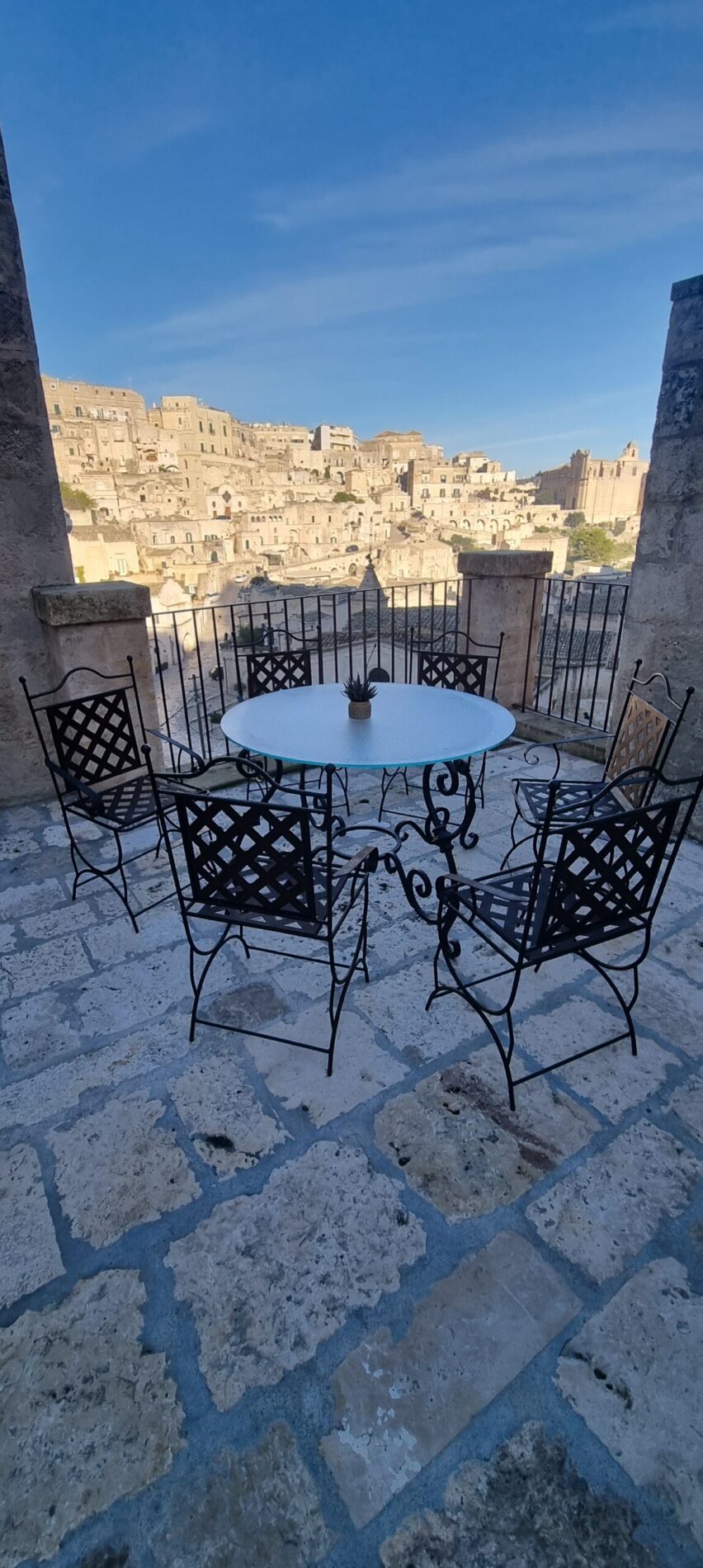
The olive trees of Puglia are the oldest continuously cultivated trees in Europe. Some are demonstrably two thousand years old; some, it is claimed, considerably older. Their trunks have grown into extraordinary forms, vast, ruptured, hollowed, sometimes three or four trunks fused into one enormous gnarled mass, and their silvered canopies move in the hot dry wind with a sound like distant water.
To walk among old olive groves in the early morning, before the heat has fully consolidated, while the light is still arriving at an angle, is to move through a landscape that feels mythological and completely domestic at once.
Pugliese olive oil carries the taste of the red earth: grassy, a little peppery, with a finish that lingers at the back of your throat, a warmth that feels mineral, not spicy. When you dip a piece of rustic bread into it, the flavour floods the mouth in a way that is both grown-up and childlike. This is the taste of a specific place. It is never anonymous. Somehow, it also recalls Sunday mornings from childhood, kitchens filled with the scent of slow-cooked food, and the feeling of being cared for without asking.
The Kitchen as Archaeology
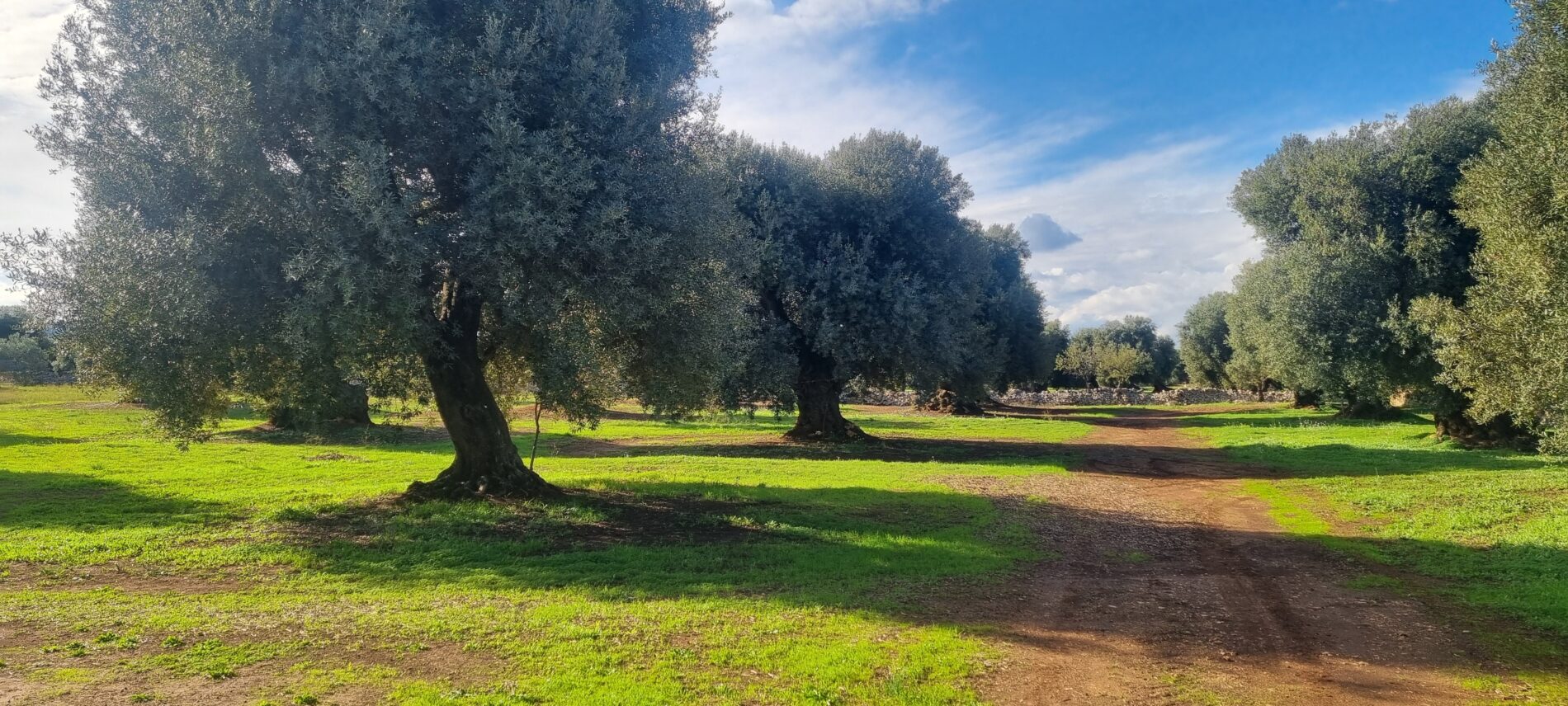
Puglian cuisine is not about ambition. It is about attention, to what the land gives, to the rhythm of the seasons, to the unique taste of a valley’s tomatoes, a farm’s sheep’s cheese, or this week’s fava beans. The cucina povera tradition, shaped by necessity, has created dishes of remarkable refinement, not in spite of its limits, but because of them.
“Eating orecchiette with cime di rapa in a small trattoria in Locorotondo, I thought suddenly of Sunday lunches from childhood, not the food, nothing like the food, but the quality of attention. Someone has made this for you, slowly, from things grown nearby, following knowledge passed down through hands rather than written down. The food tastes like memory even when you have never eaten it before.”
The bakeries open before dawn. By six in the morning, the streets near the best bakeries in Altamura, famous for their DOP bread, dense and yellow from local durum wheat, are filled with the scent of warm flour and fresh crust. A loaf here, still warm, torn by hand and eaten standing in the street, is one of the south’s simple, unforgettable pleasures.
The sound of evenings in Puglia begins with cicadas, insistent and mechanical, filling every space in the heat. As the air cools and people come outside, the low hum of the passeggiata takes over, drowning out conversations, laughter, scooters, and the scrape of chairs on stone, echoing through narrow baroque streets designed to carry and amplify these voices.
The sound of Puglian evenings: cicadas first, insistent and mechanical, filling every gap in the heat. Then, as the temperature drops and people emerge, the specific low roar of the passeggiata — conversation, laughter, scooters, the scrape of chairs on stone — filtered through the acoustics of narrow baroque streets that were built, it seems, specifically to amplify and channel human voices.
A Scene from the Harbour
The Raw & The Real · A Difficult Scene
The Fisherman and the Polpo
You hear it before you see it. A rhythmic, wet percussion, heavy, deliberate, without ceremony, coming from somewhere below the harbour wall. You look over the edge, and there he is: an old fisherman, perhaps seventy, weathered to the colour of teak, in the methodical act of beating a freshly caught octopus against the flat limestone rock at the water’s edge.
The blows are unhurried and unselfconscious. This is not performance and not cruelty in any conscious sense; it is craft, practised ten thousand times, the tenderising of flesh that would otherwise be impossible to eat. The fisherman holds the octopus by one tentacle, swings it in a wide arc, and brings it down with a sound that travels through the stone beneath your feet.
It is not easy to watch. It is not gory, but there is a certain directness, an exchange between human need and animal life, carried out on a rock made smooth by this same act, in this same place, for centuries. Some travellers turn away. Others, after a moment, find themselves unable to look elsewhere. There is something in the fisherman’s focus, the efficiency of his movements, and the lack of performance that draws your attention, even if you wish to look away.
We do not romanticise it, but we do not ignore it either. This is what it means for food to come from a real place, where the distance from sea to plate is measured in meters, not in supply chains. The South does not seek your approval. It simply continues as it always has: practical, unsentimental, and unmistakably real.
To stand there and feel uncomfortable, resisting the urge to explain it away or make it picturesque, is a kind of presence. The land asks you, once again, to notice things as they truly are, not just as you wish them to be.
Viautentica neither endorses nor advocates this practice. We present it as part of the unedited texture of southern Italian coastal life, a tradition that many find confronting and that provokes legitimate questions about the relationship between cultural heritage, food, and animal welfare. You will form your own views. That, too, is part of travelling with your eyes open.
Immersive Experiences
01
How to Move
Through This Land
These are not places for travellers who want a packed itinerary. Puglia and Matera reward a slower approach, one that allows you to be guided by an unmarked lane, the scent from a kitchen window, or the sight of an old woman hanging laundry on a rooftop in Matera’s Sasso Caveoso. What follows is not a programme, but an orientation, a series of encounters that let the land reveal itself in its own way.
02
Walking the Murge at Dawn
Before the heat sets in, the plateau is quiet, shared only with lapwings and the first light of day. Walking the old sheep tracks, the tratturi, through thyme and asphodel, with limestone surfacing in pale sheets under your feet, lets you experience the landscape from within. Guides who understand the plants and geology can turn this walk into something truly special.
03
Matera by Torchlight
The rock churches of the Sassi, carved into tufa and painted with Byzantine frescoes, are best visited in low light, the way they were meant to be seen. A private evening visit with a guide who knows both the art and the community behind it turns the experience from simple sightseeing into something more meaningful.
04
The Olive Oil Harvest
From October to November, the nets are laid out, and the olive harvest begins. Spending a morning working with a masseria family, then tasting oil pressed that same afternoon, green and intensely flavorful, is an experience you will remember for years.
05
Pasta as Meditation
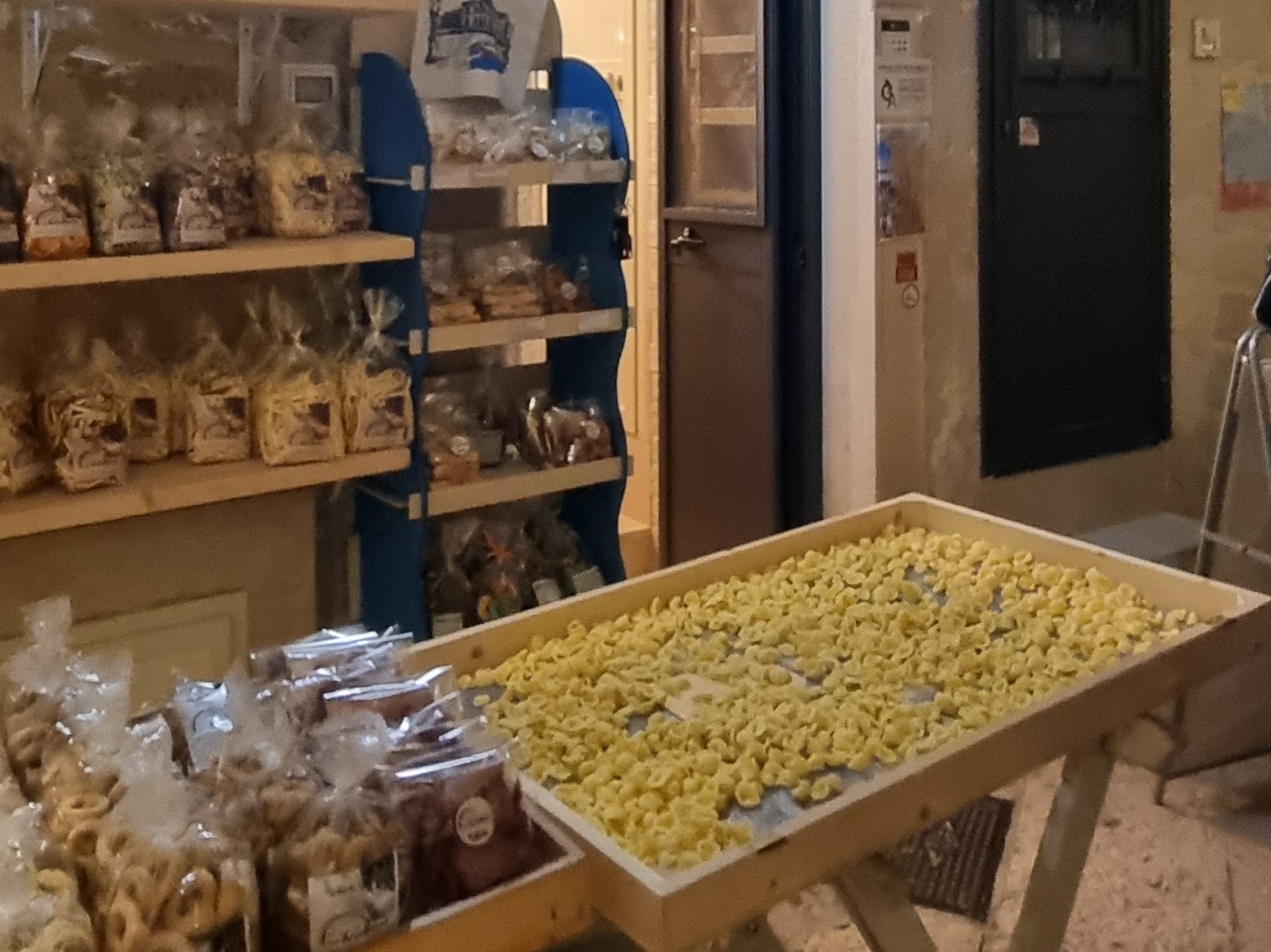
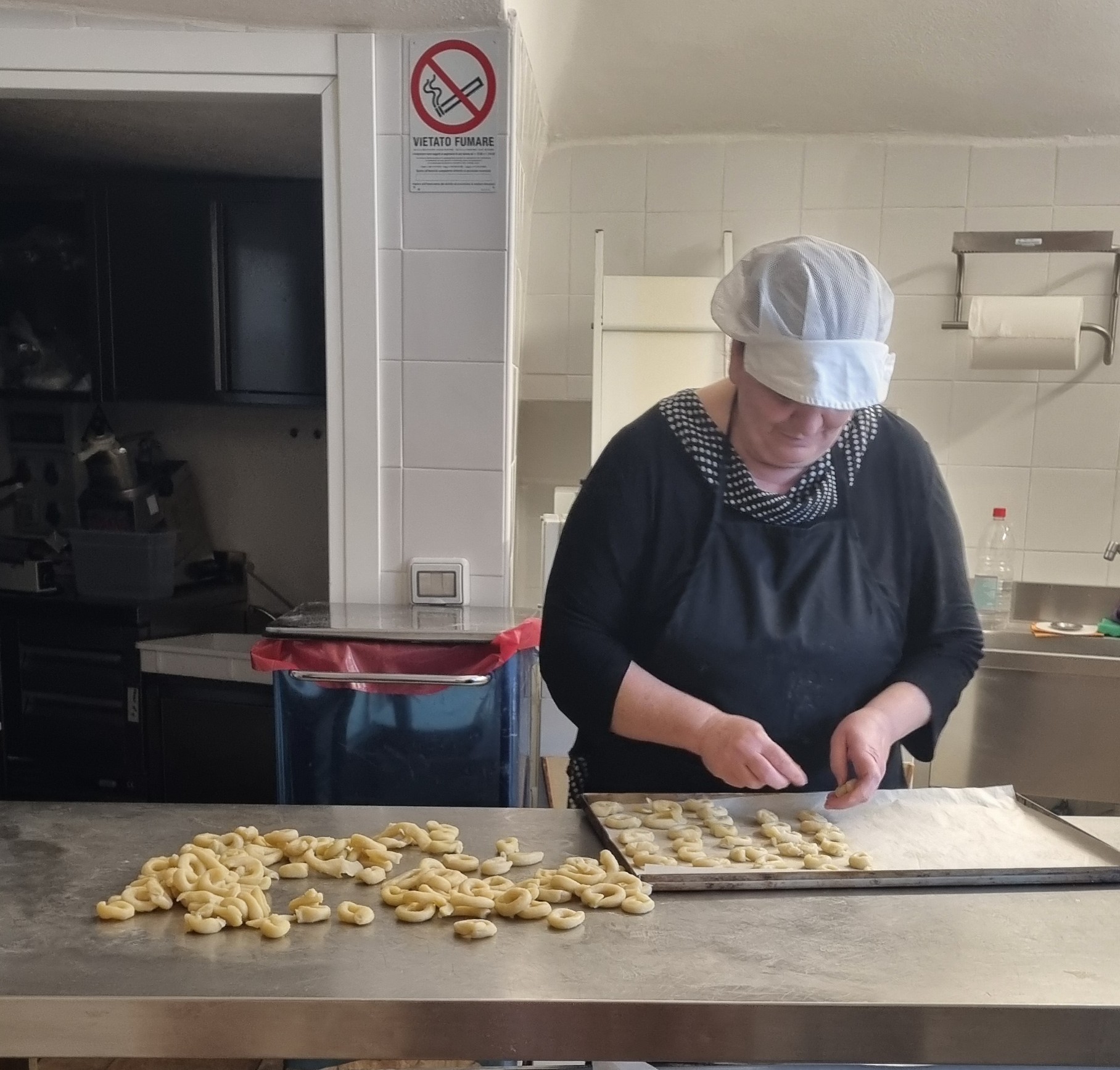
Making orecchiette, pressed and shaped with a thumb across a wooden board, is a skill you can start in a morning but spend a lifetime perfecting. Learning from a Bari nonna who has made them every day since childhood is not just a cooking lesson. It is the knowledge passed from hand to hand, just as it always has been.
07
The Adriatic at Low Season
White cliffs, sea caves, and water so clear it seems unreal, the Gargano coast is a world apart from the limestone interior. Spending a day on a local fishing boat, leaving before dawn and reaching coves only accessible by sea, gives you a sense of discovery, as if you are seeing these places for the first time.
06
Inside the Masseria
The great fortified farmhouses of Puglia — built against Ottoman raids, their walls thick enough to hold centuries of memory — contain chapels, underground cisterns, and working olive presses. Time spent in one that remains a working farm reveals a layer of the landscape that no amount of driving will provide.
The Viautentica Way
We Do Not Plan Itineraries. We Curate Encounters.
You could travel here on your own; hotels can be booked, trulli are marked, and restaurants are easy to find. But what we create for you is different: a series of encounters with people, places, and moments that most travellers never experience, shaped around who you are and what you truly seek.
Viautentica was founded on the belief that the best travel experiences are not packaged, but composed. Our role is to provide the invisible structure behind a journey that feels truly yours, unhurried, unscripted, and built from a deep understanding of the land and the people who know it best. Our Bespoke Travel Design brings this vision to life.
For Puglia and Matera, this means access to the geologist who walks the Murge and can read its ancient seabed like a text. The Masseria family will invite you into their harvest, not as guests but as participants. The Matera scholar who has spent thirty years mapping the underground cistern systems will take you, by torchlight, into chambers that no tourist route touches. The chef who will cook for you in a cave dining room using ingredients gathered that morning from producers she has worked with for twenty years.
It also means the moments we cannot plan and do not try to: the fisherman on the harbour wall, the scent of thyme on your hands days after walking in the macchia, the silence in a cave church at dusk when you are the only one left, and the frescoes seem to belong just to you.
These moments cannot be guaranteed. But they become more likely if you slow down, travel with someone who knows the way, and approach the journey ready to be truly changed by what you find.
- Deeply personal pre-journey conversations to understand what you seek
- Exclusive access to local experts, artisans, and private hosts
- Carefully selected accommodation that embodies the spirit of the place.
- Unhurried pacing, never more than one structured experience per day
- Introductions to producers, makers, and custodians of living tradition
- Discreet, invisible logistics so you are always free to be present
- A hand-crafted journal of your journey, delivered after you return.
- Ongoing connection, we travel with you well beyond the trip itself.
A Final Note
What You Carry Home
Every traveller who truly explores this part of the world comes back changed in a subtle but lasting way. Not transformed, transformation belongs to wellness retreats and packed itineraries, but changed by memories that stay with you. The way the light falls on a trullo roof at noon. The scent of thyme on your hands days after walking in the macchia. The weight of rough tufa stone in your palm in a Matera courtyard. The sound of the fisherman working on the harbour rock, complex, uncomfortable, and real.
These are not just photographs. They are sensory memories, recorded in your body rather than your mind. Puglia and Matera offer them freely, without planning or effort, simply by being present in a landscape so ancient and elemental that it lets you feel deeply, without barriers.
This is the reason we come here. Not for the hotel rooms, those are exceptional, but they come later. We come for the stone, the light, and the scent of thyme pressed between your fingers as you walk back, while swallows begin their evening flight above the white road, the red earth, and the ancient olive trees.
The destination is only the beginning. The more interesting question is which version of it belongs in your journey.
Field Notes is where I look beyond the images most commonly associated with a place. If you decide when to travel based on what a region offers at a particular time of year, that same thinking is at the heart of how we design bespoke journeys at Viautentica.